
Peoria Resident Lookup Sources
No official roll names every Peoria resident. A good resident lookup joins records that were created for different public duties. Start with the source closest to the fact being tested. Property files show an owner or taxpayer, court files show a party in a case, and license files show a credential. Those roles are not proof that the named person lives at a given address.
| Record | What It Can Confirm | Keeper | Access |
|---|---|---|---|
| Property and GIS | Owner, mailing address, situs address, PIN, legal description | Peoria County | Public online search |
| Recorded documents | Grantor, grantee, document date and land description | County Recorder, EagleWeb | Public index; image and copy routes vary |
| Voter status | Status, polling place and districts for supplied identity details | Illinois elections authorities | Targeted self lookup; bulk file restricted |
| Court cases | Party role, case number, filing date, type and status | Peoria County Circuit Clerk | Free public portal where exposed |
| Vital and probate | Event, estate, heirs and file references | County Clerk, Circuit Clerk, IDPH and IRAD | Eligibility and date limits apply |
| Credentials and entities | License, entity role, registered office or claim | Illinois agencies | Public agency searches |
If only a name is known, list spelling variants first and search records with dates or roles. If an address is known, the property record can supply a parcel key before the name is checked elsewhere. For an older person, library directories, obituary tools, probate files, and released archives may be more useful than current portals.
Search Peoria Court Names
The Peoria Smart Search accepts a record number or a name written as last name, first name, middle name, and suffix. Advanced filters include party name, nickname, business name, Sounds Like, case number, citation, judicial officer, filing dates, case status, and judgment type. Public searching is free and does not require registration, though anonymous requests meet a CAPTCHA.
| Result detail to save | Why it matters |
|---|---|
| Party name and role | Prevents a witness or other party from being misread as the subject of the case. |
| Case number and court | Gives the clerk an exact retrieval key. |
| Case type, status and filing date | Separates similar names and places the event in time. |
| Docket and disposition | Shows the filed event and outcome when public. |
| Retrieval date | Marks when the changing index was checked. |
A court hit alone says nothing about current residence or wrongdoing. Sealed, juvenile, adoption, mental-health, and other protected files may be absent or limited. Public computers are available in the courthouse Law Library and Self Help Room when the online resident lookup cannot expose enough detail.
Verify One Peoria Resident
Common surnames, initials, married or widow names, suffixes, and scan errors can join two people by mistake. Build a short variant list, then compare at least two independent details. A date, address, school, business, professional role, case number, or parcel PIN is stronger than a name by itself.
- Search the exact name and its likely variants. Keep middle initials and suffixes separate, and use Sounds Like only to discover candidates.
- Anchor one candidate to a dated Peoria record. A parcel, court case, directory page, probate file, or license result can supply a stable number or role.
- Check a second official source. Match the year, address type, role, and agency before deciding the records concern the same person.
- Ask the custodian for the correct file or certified copy when proof is needed. Give the office a case, document, event, or record year rather than a broad name request.
- Docket
- The dated list of filings and events in a court case.
- Index and image
- An index points to a record; an image shows the underlying filed document.
- Certified copy
- An official copy authenticated by the office that keeps the record.
- Situs address
- The physical location of a parcel, which can differ from the owner's mailing address.
Note: A Peoria tax owner, court party, license holder, or registered office is a dated role, not automatic proof of occupancy.
Peoria License Lookup Trails
State credentials can distinguish people who share a name. The IDFPR License Lookup accepts board, status, license number, legal business name, first name, last name, city, state, county, and ZIP. Results may show a license number, status, city and state, effective and expiration dates, and a discipline indicator. The city field describes the credential record, not a home address.
The captured IDFPR search page shows the public search surface used for a Peoria resident lookup.
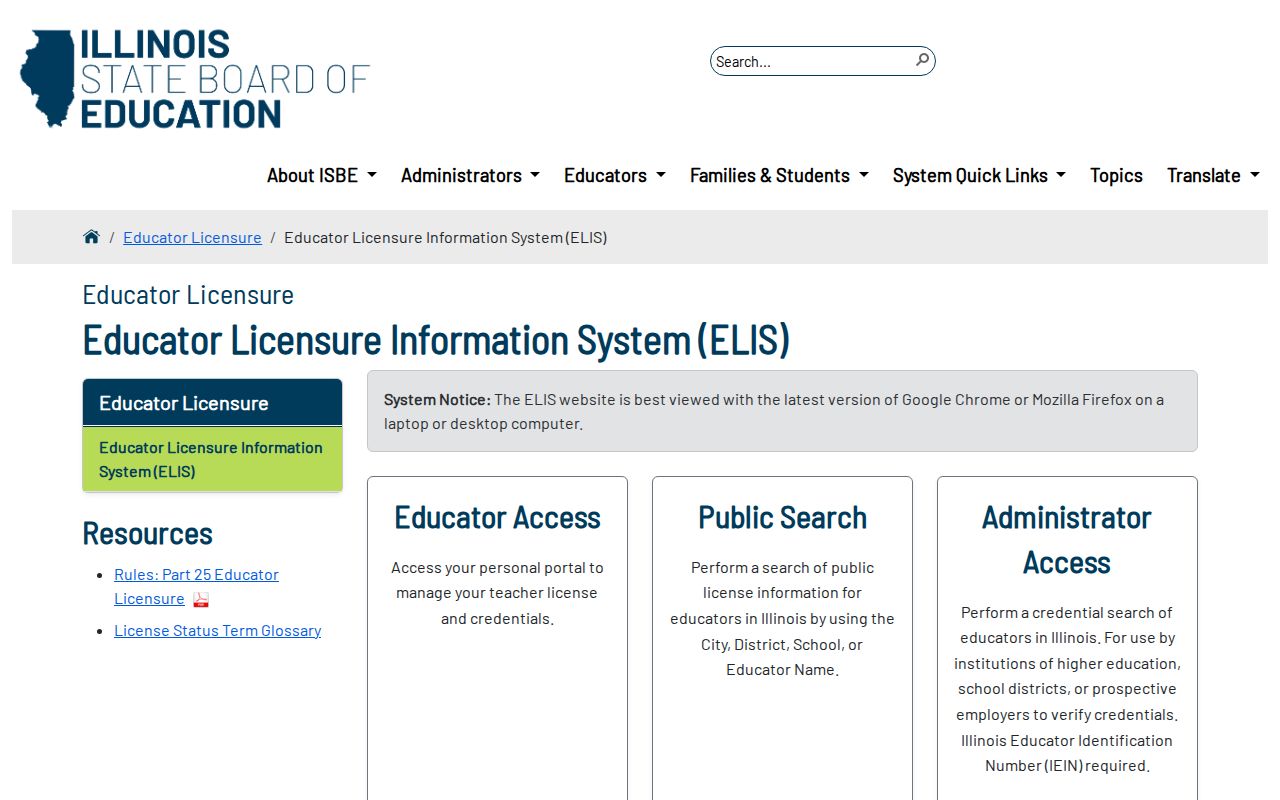
Use the displayed status and dates to test whether a credential is current, then match the holder through another record.
ISBE ELIS searches educator credentials by educator, city, district, or school. The Illinois attorney licensure roll provides admission and name-change information.
The attorney licensure roll is another role-based source captured for Peoria searches.
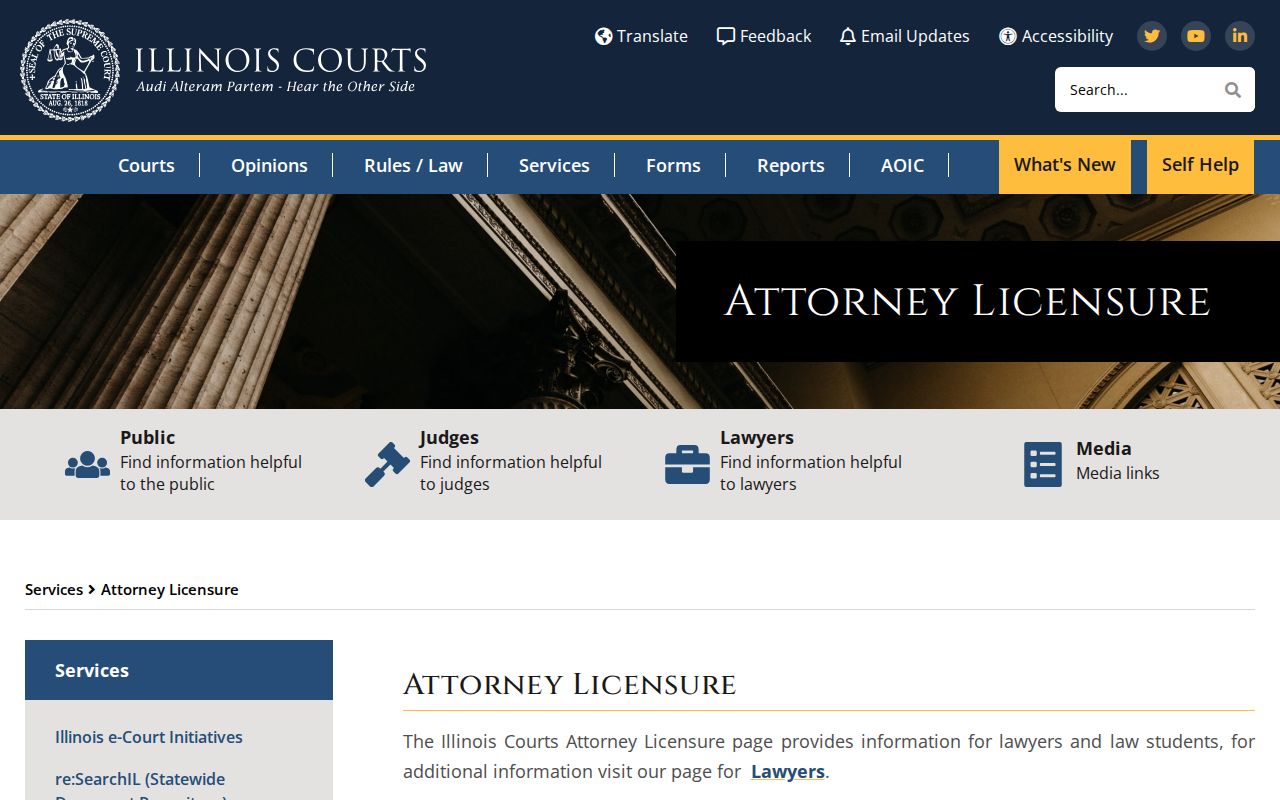
Neither credential list should be treated as a household directory.
Confirm Peoria Resident Heirs
For an estate or heir question, the historical Peoria probate index is a strong starting point. IRAD describes 3,105 index records from 1825 through 1887. Search the name of the estate with surname-only and alternate spelling forms. Entries can lead to case numbers, minors, heirs, administrators, petitions, inventories, appraisals, land sales, accounts, proofs of heirship, claims, and wills.
The index does not replace the file. Request the cited case from the proper archive or court, then compare named heirs with deeds, obituaries, and dated directories. Probate was handled by different Peoria courts over time, so older IRAD material complements the current Circuit Clerk portal. Western Illinois University's regional depository accepts narrow requests and provides reading-room, mail, and phone channels.
Peoria Resident Yearbook Search
A former classmate is often easier to identify by school year than by a modern surname search. Peoria Public Library keeps high-school yearbooks, newspapers, obituaries, city directories, and local-history databases. Bradley collections include Polyscope yearbooks from 1901 through 1949, along with archive material and street photographs. Search a class year, then confirm the person on the scanned page and compare a nearby directory year or newspaper notice.
This human-use route handles changed surnames and common names with more care. Save the yearbook title, school, year, page, and image. A later address or obituary should be treated as a separate source, not blended into the school record. The Peoria Directory Book gives fuller guidance for reading the city's historical directory collections.
Illinois Birth-Parent Lookup Route
Illinois adoption records do not work like an open resident lookup. The state is a closed-adoption state, and identifying release depends on eligibility, consent, and the proper program. The Illinois Adoption Registry and Medical Information Exchange serves eligible adult adopted or surrendered people, specified adoptive parents or surviving relatives, and legal guardians. Birth-parent preference and mutual consent govern release.
The DCFS Confidential Intermediary Service is a court-appointed route subject to its own consent and fee rules. A public directory, surname match, or current vital index cannot replace either process. For ordinary Peoria birth, death, marriage, or civil-union records, use the County Clerk or IDPH application channels and their identification, relationship, and event-county rules.
More Peoria Resident Search Clues
The Illinois Treasurer's ICash claim search accepts owner or business name, city, ZIP, or property ID. It can establish that a claim record exists, but not where the owner now lives.
The official ICash search was captured as a useful Peoria resident lookup companion.
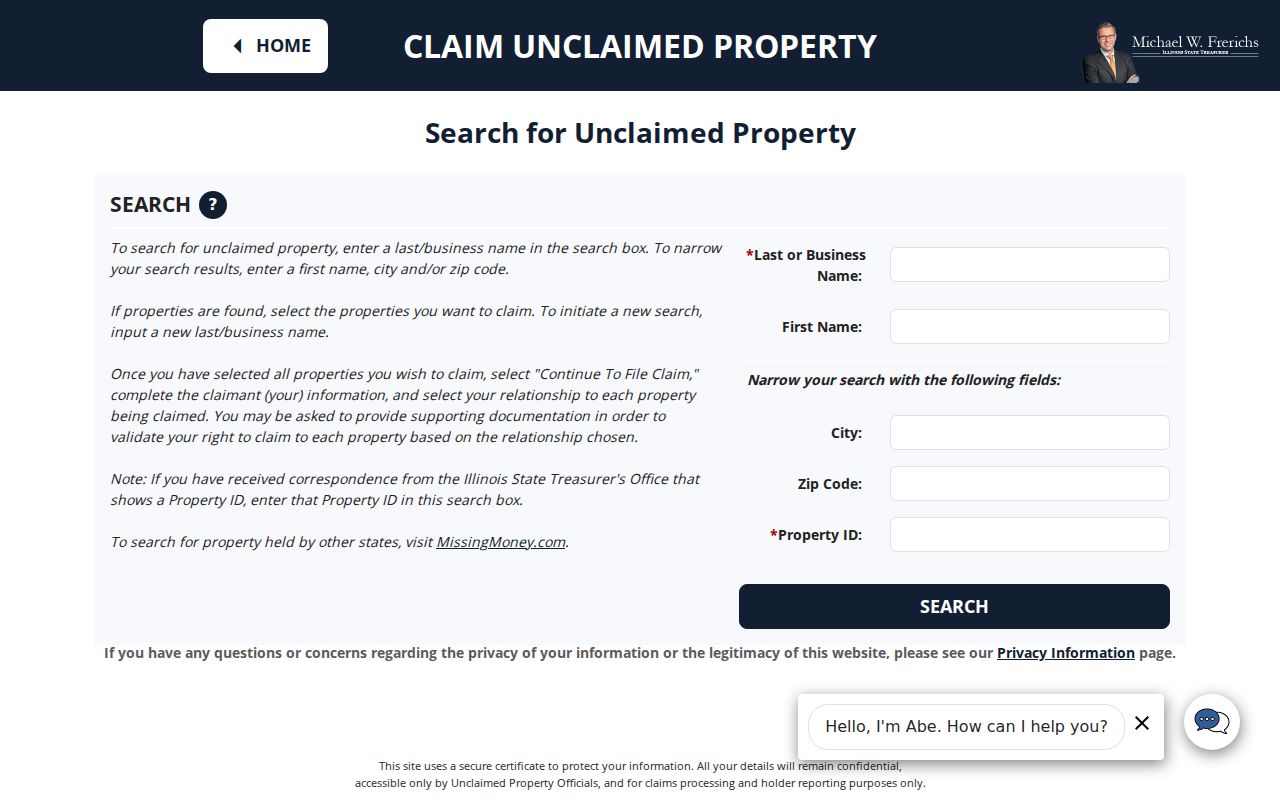
Match a claim through the Treasurer's process and avoid drawing residence conclusions from the city field alone.
The Peoria Election Commission supports registration and address changes, but the public state form is a targeted status search. It requires first and last name, birth date, ZIP, street number, and a street selector. The search returns registration, polling place, and districts, not ballot choices or a public reverse roster.
The local election office page shows the official channel for Peoria voters.
Use that channel for one's own status or direct office help, and respect the statutory limits on voter data.
Peoria Resident Lookup Boundaries
Illinois law closes or limits many personal fields. Certified vital copies require an eligible requester and identification. Voter files redact sensitive information and may be released only for qualifying uses. Sealed court, juvenile, adoption, mental-health, and protected records can be missing from public results. The Address Confidentiality Program gives qualifying survivors a substitute address, but it cannot erase records created before enrollment.
If a result is wrong, record the URL, retrieval date, and incorrect field. Ask the agency that owns the record for its correction or copy process. City or county Illinois FOIA requests should be narrow and directed to a department, date, person, or address. FOIA is not a substitute for restricted vital-copy or adoption procedures.
Access also continues away from the web. The Circuit Clerk can route a request by case number, the County Clerk accepts the proper vital-record application, and IRAD or its Western Illinois University depository can identify transferred historical series. Peoria Public Library and the county genealogical society can check a named year, street, obituary, or directory page. Mail, phone, and reading-room requests work best when they include a full name, spelling variants, a record type, and a narrow date range.
A no-record answer can be useful. It may show that the wrong custodian was asked, that an index does not cover the year, or that the file is restricted. Log the office, date, search terms, and response. Then change one variable at a time. That method is safer than merging several weak name matches into one identity.
Lawful use. Keep every Peoria resident lookup narrow and personal. Never use a record to stalk, harass, intimidate, or expose protected information.